


In today’s digital landscape, websites face continuous security threats from cybercriminals attempting to steal sensitive information, disrupt services, or exploit application vulnerabilities. Businesses of all sizes need strong protection to keep their websites secure and maintain customer trust.
A web application firewall is an essential security solution that monitors, filters, and blocks malicious web traffic before it reaches your applications. It helps defend websites against common cyber attacks such as SQL injection, cross-site scripting (XSS), malicious bots, and other online threats. Unlike traditional network security solutions, this technology focuses specifically on protecting web applications by analyzing HTTP requests and identifying suspicious activity in real time.
What Is a Web Application Firewall?
A web application firewall (WAF) is a security layer placed between users and a web application to inspect incoming traffic and prevent harmful requests. It works by analyzing communication between visitors and your website, allowing legitimate users to access your services while blocking potential threats.
Modern websites often contain customer data, payment systems, login portals, and business information. Without proper protection, attackers can exploit security weaknesses and gain unauthorized access. A web application firewall helps organizations strengthen their website security by providing continuous monitoring and automated threat prevention.
How Does a Web Application Firewall Work?
A WAF uses predefined security rules, threat intelligence, and advanced detection methods to identify harmful traffic patterns. When a visitor sends a request to a website, the firewall evaluates the request before allowing it to reach the server. Understanding What Is a Firewall in Computers helps explain how security systems monitor and control digital traffic to protect websites and networks from potential threats.
The working process generally includes:
1. Traffic Monitoring
The firewall examines incoming web requests, user behavior, and traffic patterns to identify unusual activities and detect potential security risks.
2. Threat Detection
It detects suspicious activities such as unauthorized access attempts, injection attacks, malicious scripts, and automated bot traffic before they can affect the website.
3. Request Filtering
Based on security policies, harmful requests are blocked while genuine visitors continue accessing the website normally without disruption.
4. Continuous Protection
A WAF continuously updates its security rules and threat intelligence to respond to emerging threats and newly discovered vulnerabilities, providing ongoing website protection.
Why Does Your Website Need a Web Application Firewall?
Websites are common targets for cyber attacks because they provide direct access to valuable business and customer information. Even a small vulnerability can create serious security risks.
Implementing a web application firewall provides multiple benefits, including:
Protection Against Common Cyber Attacks
SQL injection attacks
Cross site scripting (XSS)
Distributed denial of service (DDoS) attacks
File inclusion attacks
Malicious bot activities
Unauthorized access attempts
By blocking harmful requests before they reach your application, businesses can reduce security risks significantly.
Common Threats Blocked by a Web Application Firewall
A properly configured web application firewall protects websites against a wide variety of cyber threats.
SQL Injection
Prevents attackers from manipulating database queries and stealing sensitive information.
Cross Site Scripting (XSS)
Stops malicious scripts from being injected into web pages viewed by users.
Cross Site Request Forgery (CSRF)
Blocks unauthorized commands executed on behalf of authenticated users.
DDoS and Bot Attacks
Filters excessive traffic, malicious bots, and automated attacks designed to overwhelm your website.
Brute Force Login Attempts
Detects repeated login failures and blocks unauthorized access attempts.
How a Web Application Firewall Works
A web application firewall sits between users and your web server. Every request passes through the firewall before reaching your application.
The firewall performs several important functions:
1. Traffic Inspection
Incoming requests are analyzed in real time to identify suspicious patterns and malicious payloads.
2. Threat Detection
Advanced rule sets recognize known attack signatures while behavioral analysis identifies unusual activity.
3. Attack Prevention
If malicious traffic is detected, the firewall immediately blocks or filters the request before it reaches your website.
4. Continuous Monitoring
The firewall generates security logs and alerts, helping administrators monitor threats and improve security policies.
Key Features of a Web Application Firewall Appliance
Choosing the right web application firewall appliance offers several valuable features that strengthen website security.
1. Advanced Threat Intelligence
Continuously updates security rules to defend against newly discovered vulnerabilities.
2. Real Time Monitoring
Provides live visibility into website traffic, blocked attacks, and security events.
3. SSL Inspection
Examines encrypted HTTPS traffic without compromising user privacy.
4. Custom Security Policies
Allows administrators to create application-specific protection rules.
5. Load Balancing Support
Many enterprise grade web application firewall appliance solutions improve both security and application performance.
6. High Availability
Ensures uninterrupted protection even during hardware failures or heavy traffic conditions.
Cloud Based WAF vs Web Application Firewall Appliance
Both deployment options offer strong protection, but they serve different business needs.
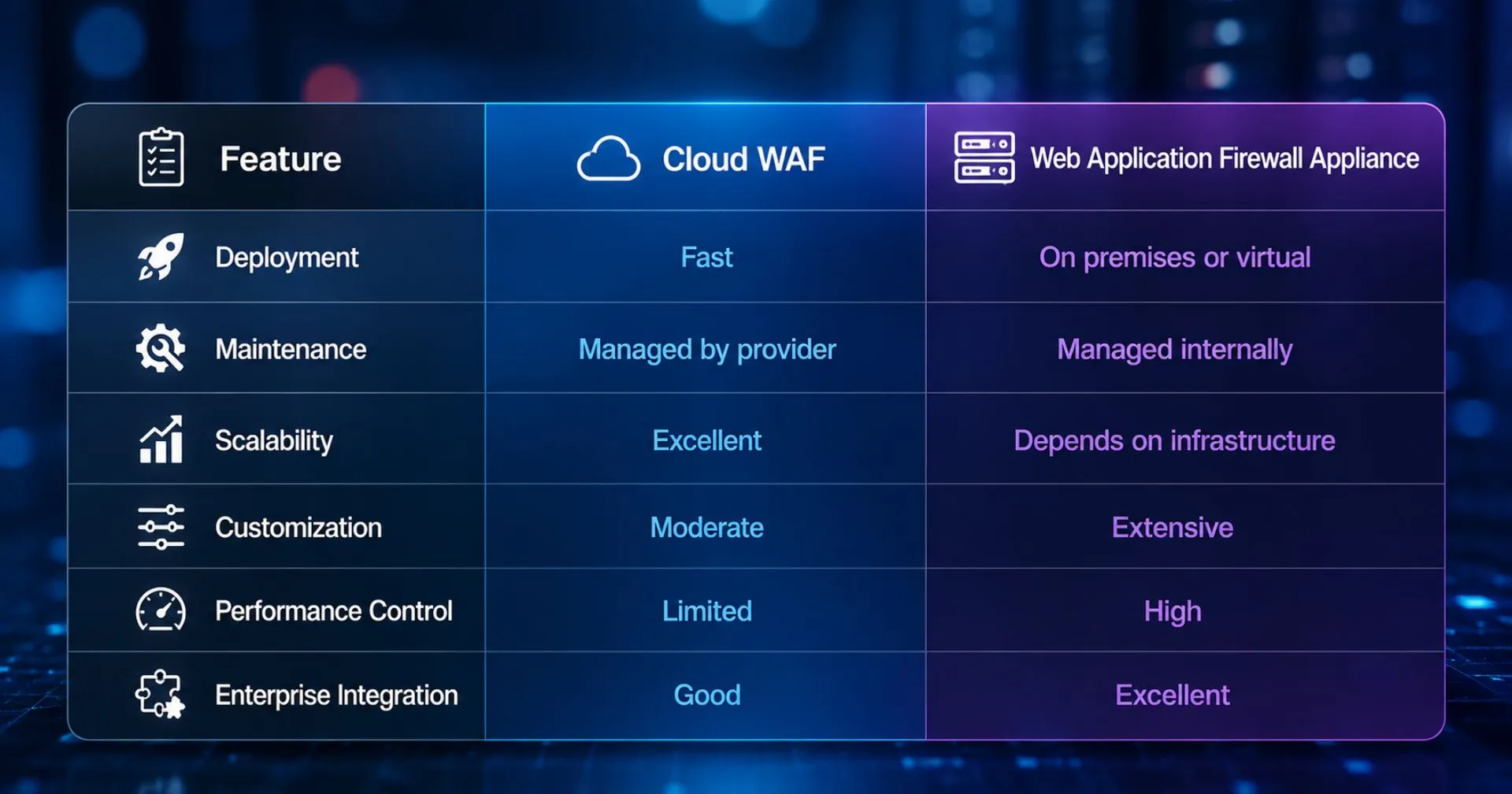
Organizations with strict compliance requirements often prefer a web application firewall appliance, while cloud based solutions are ideal for businesses seeking faster deployment and simplified management.
How to Choose the Right Web Application Firewall Appliance
Selecting the best web application firewall appliance depends on your organization's security needs.
Consider the following factors:
Website traffic volume
Type of applications being protected
Compliance requirements
Scalability
Ease of management
Integration with existing infrastructure
Threat intelligence capabilities
Vendor support and updates
A careful evaluation ensures your investment provides long-term protection and operational efficiency.
Best Practices for Maximizing Website Security
A firewall works best when combined with other cybersecurity measures.
Follow these best practices:
Keep web applications updated.
Enable multi factor authentication.
Perform regular vulnerability assessments.
Monitor security logs consistently.
Encrypt sensitive customer data.
Back up website data regularly.
Limit administrative access.
Conduct periodic penetration testing.
Together with a reliable web application firewall, these practices create a strong defense against modern cyber threats.
Protect Your Website Today with SpamCloud
Don’t wait for a security breach to impact your business. Strengthen your website protection with SpamCloud’s Web Application Firewall solutions and keep your applications safe from modern cyber threats. Contact SpamCloud today and secure your website with trusted cybersecurity solutions.
Stay updated
Subscribe for new posts and insights.